
Introduction
This Sunday’s Gospel text is one of the more uncomfortable encounters with Jesus. A Canaanite woman comes to Jesus desperate for help. Her daughter is suffering, and she knows that Jesus has the power to heal. She approaches him with faith, calling him “Lord” and “Son of David.”
And Jesus initially refuses to answer her at all. And when she persists, Jesus responds with words that should trouble us. “It is not fair to take the children’s food and throw it to the dogs.”
It is an insult. A harsh insult.
Now, there is a temptation with this text to explain away the discomfort. Some have argued that Jesus was testing her faith. Others have suggested that the language would not have been offensive in Jesus’ time. But those interpretations miss what Matthew is doing. Matthew is not afraid of tension. Matthew places difficult moments directly in front of us because it is in those moments that the kingdom of God is revealed.
Jesus’ words are difficult because they are difficult. We should not protect Jesus from this encounter.
The same Jesus who welcomed crowds, healed the sick, and fed thousands in the wilderness now encounters one woman who seems to be an exception. For the crowds, Jesus called them in. For this woman, Jesus almost drives her away.
And Matthew wants us to wrestle with why and to see that Jesus changes his mind.
Narrative Context
This story immediately follows Jesus’ confrontation with the Pharisees about purity traditions. The religious leaders are concerned about external practices and boundaries. They ask why Jesus’ disciples do not follow the tradition of ritual handwashing before eating.
Jesus responds: “It is not what goes into the mouth that defiles a person, but it is what comes out of the mouth that defiles.”
What comes from the heart reveals what is truly within.
Matthew then puts this immediately into practice and places Jesus in Gentile territory.
Jesus leaves that place and goes to the region of Tyre and Sidon, an area with a long history of tension between Jews and Gentiles. The Canaanite woman who approaches Jesus is not simply a random outsider. She represents a people with whom Israel had experienced generations of conflict.
The relationship between Galilee and Tyre was complicated. Tyre was wealthy and dependent on Galilean agriculture, especially in times of food scarcity. Those with wealth in Tyre could purchase grain from Galilee when resources were limited, creating deep resentment among Galileans who watched their harvest feed a wealthier neighboring region while their own communities struggled. This image of “dogs” was not a neutral metaphor. It carried the weight of hostility, economic inequality, and generations of division.
Matthew intensifies the tension even further by calling her a Canaanite. In Mark’s account of this story, she is identified as a “Syrophoenician woman” (Mark 7:26), the contemporary ethnic designation. Matthew deliberately reaches back centuries and resurrects the name of Israel’s ancient enemies. By the first century, no one would have ordinarily referred to a woman from this region as a Canaanite. Matthew chooses the title because it evokes Israel’s deepest memories of conflict and division. Before she ever speaks, she is introduced not simply as a Gentile but as the embodiment of generations of inherited hostility.
So when Jesus says, “It is not fair to take the children’s food and throw it to the dogs,” we should acknowledge what is happening. Jesus is not simply making an abstract theological statement. He is drawing a boundary. The children receive the food. Others do not.
But this story comes immediately after another story with feeding images.
Just one chapter earlier, Jesus was in the wilderness with thousands of people gathered around him. The disciples looked at the crowd and said: “Send the crowds away.”
There was not enough food.
There were too many people.
The problem needed to be removed.
Jesus responded: “They need not go away; you give them something to eat.”
The disciples saw scarcity.
Jesus revealed abundance.
Now, one chapter later, the disciples find themselves in a similar situation.
A person is in need.
A person is disrupting the group.
A person does not appear to belong.
And their response is the same: “Send her away.”
Send her Away
The repetition of “send away” is not accidental.
Just one chapter earlier, the disciples looked at a hungry crowd and urged Jesus, “Send the crowds away.” Faced with thousands of hungry people, they saw scarcity. There was not enough food. The problem needed to be removed.
Jesus refused.
“They need not go away,” he told them. Instead, he fed them until everyone had enough, and twelve baskets of bread remained.
Now Matthew presents another person in desperate need.
Again, the disciples say, “Send her away.”
But this time, Jesus does not immediately challenge their response.
He is silent.
Then he says, “I was sent only to the lost sheep of the house of Israel.”
Then he draws the boundary even more sharply: “It is not fair to take the children’s food and throw it to the dogs.”
That is the scandal of this text.
The same Jesus who refused to send away the hungry crowds now seems ready to send away a desperate mother.
Why?
Matthew has not placed this story in isolation. Jesus has spent the last two chapters carrying grief, conflict, and exhaustion. John the Baptist has been murdered. Jesus attempted to withdraw but was met by crowds needing healing. He has fed thousands, walked on the sea in storm, endured Peter’s misunderstanding, and immediately found himself in another confrontation with the Pharisees over purity and religious boundaries. Now he enters a region that represents generations of hostility, economic resentment, and division for the people of Galilee.
The Canaanite woman is no longer simply a mother asking for help. She becomes, in Jesus’ eyes, the embodiment of generations of resentment and division
Like so many before him, Jesus is swept into the inherited divisions of his people. The resentment between Israel and Canaan, Galilee and Tyre, become more than history; they become the lens through which he sees the woman standing before him. The boundary he refused to draw around the hungry crowds is now drawn around her.
If we take seriously that Jesus is fully human, then we should not be surprised that he bears the wounds of his community as well as its hopes. Humanity is not simply hunger and fatigue. It is also inherited grief, inherited enemies, and inherited stories about who belongs and who does not.
But those inherited divisions do not have the final word.
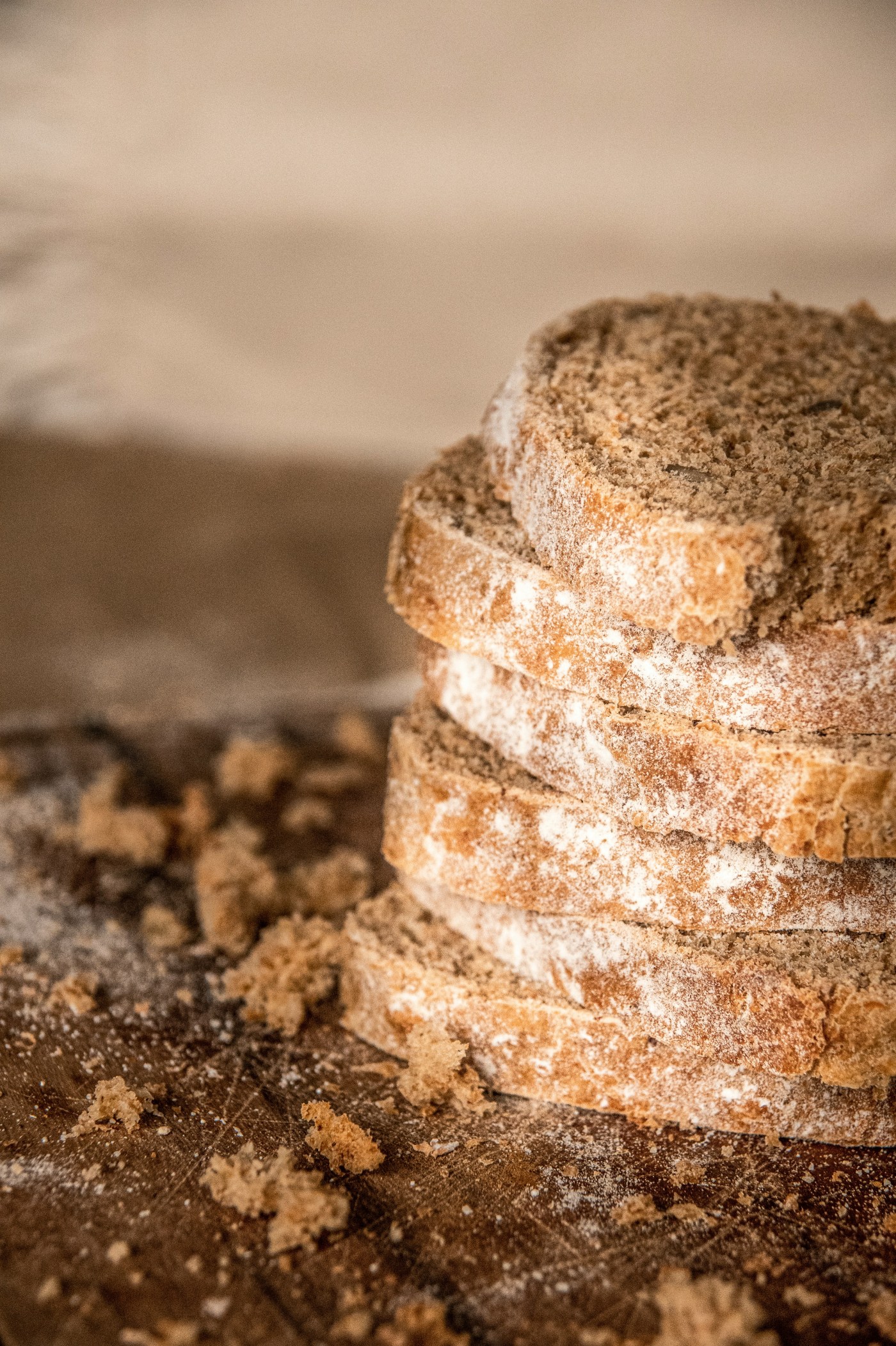
The woman refuses to accept the boundary. She takes Jesus’ own image of bread and transforms it.
“Yes, Lord, yet even the dogs eat the crumbs that fall from their masters’ table.”
She reminds Jesus of what he himself had revealed only one chapter earlier.
There was enough bread for everyone.
There were baskets of leftovers.
There is enough.
Her faith breaks through generations of hostility. Jesus no longer sees a Canaanite, an enemy, or a representative of Tyre. He sees a mother pleading for her daughter. He sees faith.
“Woman, great is your faith!” Jesus changes his mind.
The one he was prepared to send away becomes the one whose faith reveals that the abundance of God’s kingdom is greater than every boundary inherited from history, grief, or resentment.
This moment also fits a larger pattern throughout Matthew’s Gospel. Again and again, those on the outside recognize something about Jesus that those on the inside struggle to see. Foreign magi travel across the world to worship the newborn king while Jerusalem remains unmoved. A Roman centurion trusts Jesus’ authority so completely that Jesus declares, “Truly I tell you, in no one in Israel have I found such faith” (Matt. 8:10). Now a Canaanite woman approaches Jesus with the same confidence, calling him “Lord” and “Son of David.” Throughout the Gospel, Matthew repeatedly shows outsiders recognizing the kingdom before insiders do.
This intensifies Jesus’ final words even more: “Woman, great is your faith!” Throughout Matthew, Jesus repeatedly reprimands his own disciples for having “little faith.” Yet the only people Jesus explicitly praises for having “great faith” are a Roman centurion and this Canaanite woman, both Gentiles. The woman who was almost sent away becomes the very model of faith for Jesus’ disciples and for the church.
Preaching Possibility
We Don’t Need to Defend Jesus. Let the Kingdom Grow.
This text doesn’t really have an easy resolution.
Some congregants will be uncomfortable with the suggestion that Jesus changes his mind. Others will be uncomfortable with Jesus’ harsh language. Still others may simply wish the story were not in Scripture at all.
Perhaps that discomfort is precisely Matthew’s point.
Matthew does not tell this story to diminish Jesus. He tells it to reveal the extraordinary breadth of God’s kingdom. The woman who should have been excluded becomes the one who teaches the disciples, and even Jesus himself, that God’s mercy cannot be contained by inherited boundaries.
For us preachers, the temptation will be to spend the entire sermon defending Jesus. Resist that temptation.
Matthew does not seem interested in defending Jesus from the tension of this encounter. Instead, he invites us to watch what Jesus does with that tension. Jesus is confronted by a faith he did not expect, sees the woman before him differently, and refuses to let generations of hostility determine the future of God’s kingdom.
In Matthew, again and again, those whom the community expects to remain outside become the very people through whom God teaches the community.
The church should be careful whenever it is tempted to say, “Send them away.”
Who are the people we have reduced to labels rather than neighbors? Who have we come to see primarily through inherited fears, political divisions, cultural assumptions, or generations of resentment? Whose cries have become interruptions rather than invitations to compassion?
The good news of this text is not simply that Jesus heals one woman’s daughter. The good news is that hostility does not have the final word. The boundaries history teaches us to draw are not the boundaries of God’s kingdom. The kingdom is always larger than our fears, our prejudices, and our assumptions about who belongs.
There was enough bread in the wilderness.
There were baskets of leftovers.
There is enough grace and mercy for everyone.
Sign up for this commentary here:


Leave a Reply