

Introduction
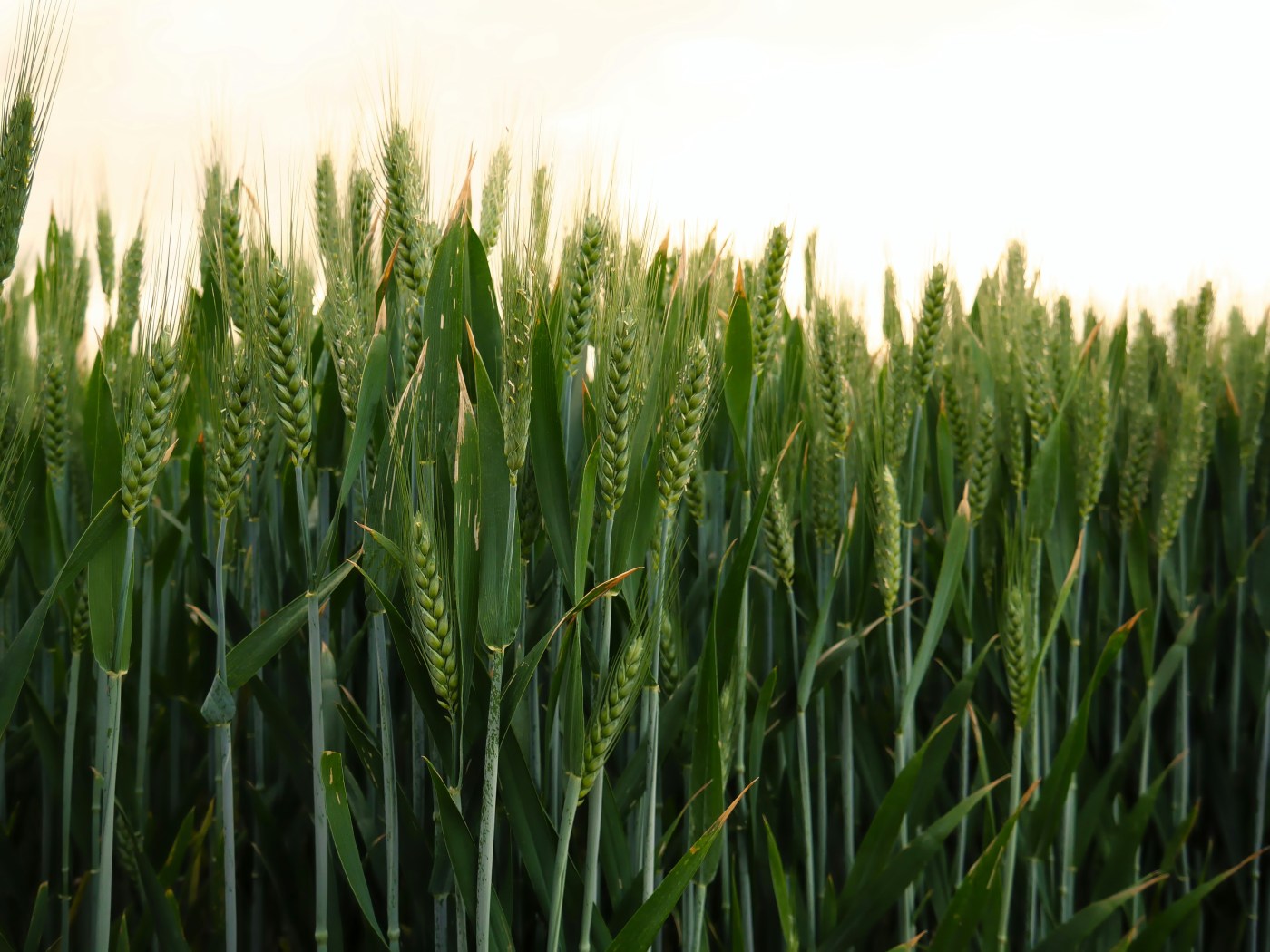
Last week Jesus compared the kingdom of heaven to a sower scattering seed with reckless abundance. This week the image shifts from the generosity of the sower to the patience of the landowner. The good seed has taken root, but it is not alone. An enemy has sown weeds among the wheat, and now both grow together until the harvest.
This week’s parable will not answer every question we might ask about the origin of evil nor is it trying to explain why there are good and bad things in the world. Instead, it asks: How are the people of God to live in a world where good and evil remain tangled together?
Narrative Context
Matthew continues his collection of kingdom parables in chapter 13. These are not disconnected stories with individual morals. Together they answer the growing tension that has developed throughout chapters 11 and 12.
If Jesus truly is the Messiah, why hasn’t everything changed? It’s still John the Baptist’s question from a few weeks ago, “Are you the one…or are we to wait for another?” Not enough has changed!
John still sits in prison. The religious leaders oppose Jesus. Cities reject his preaching. Demons continue to torment people. Rome still rules. The kingdom has arrived, but the world hardly looks transformed.
This parable addresses precisely that tension.
Notice that Jesus tells the parable publicly to the crowds, but its explanation comes privately inside the house (13:36). Just as with the Parable of the Sower, Matthew invites the disciples (and his listeners/readers) to move beyond simply hearing the story toward understanding how it interprets the present age.
The explanation leaves little ambiguity. The field is “the world” (κόσμος), not the church. The Son of Man has sown children of the kingdom throughout creation, yet the enemy has also been at work. The harvest represents “the end of the age” (συντέλεια τοῦ αἰῶνος), one of Matthew’s favorite expressions for God’s final consummation. Matthew consistently uses this phrase not to predict an imminent apocalypse but to point toward God’s ultimate future. Judgment belongs to the end, not to the present.
Timing matters in the trajectory of this parable. As soon as Jesus begins explaining the imagery, our attention naturally shifts to the coming judgment. Yet Matthew slows the story down. The question is not whether there will be a harvest. The question is when. The crisis in the parable is not God’s judgment but humanity’s impatience. The pressure to act comes not from the Son of Man but from the slaves who cannot tolerate the ambiguity of a field where wheat and weeds grow together.
The slaves want immediate action. Pull the weeds now. Clean up the field. Separate the righteous from the wicked while there is still time.
The master refuses.
Not because the weeds are harmless.
Not because justice doesn’t matter.
But because premature judgment risks destroying the wheat as well.
The image itself would have resonated with Matthew’s hearers. Wheat and darnel (a poisonous weed that closely resembles wheat in its early stages) are notoriously difficult to distinguish until the grain matures. The problem is not merely that weeds exist, but that premature judgment can mistake one for the other. Matthew’s concern is not simply evil in the abstract. It is the danger of assuming we can identify, separate, and remove evil before God’s appointed time.
For Matthew’s community, likely living amid conflict, persecution, and competing claims about who truly belongs to God’s people, this would have been both frustrating and comforting. Evil is real. Judgment is certain. But neither belongs to the world.
The Patience of God
Everything about the slave’s proposal sounds reasonable. They identify the problem correctly. They offer a solution. They volunteer to do the difficult work. If the field contains weeds, surely faithful slaves should remove them.
Instead, the master tells them to wait.
This patience should not be mistaken for indifference. The harvest is still coming. Matthew leaves no doubt that God will judge evil. The explanation Jesus gives is among the clearest depictions of final judgment in the Gospel.
Yet until that day, the defining characteristic of God’s kingdom is patient mercy rather than anxious separation.
Divine patience is often mistaken for divine absence. We assume that because God has not acted, God must not care. Matthew says precisely the opposite. God’s delay is not neglect but mercy. The kingdom is already at work, but it grows according to God’s timetable rather than ours.
This is where Luther’s theology offers an important lens. We confess that Christians are simul iustus et peccator (simultaneously saint and sinner). We resist any temptation to imagine that humanity can be neatly divided into pure wheat over here and pure weeds over there. Sin is never merely “out there” in someone else. It remains stubbornly present within each of us even as Christ has declared us righteous through grace.
Perhaps that is another reason the slaves are not entrusted with the harvest.
We are remarkably poor judges of hearts.
We often confuse appearances with faithfulness. We mistake our enemies for God’s enemies. We are quick to uproot those whom Christ is still patiently nurturing.
The kingdom grows through God’s patience before it culminates in God’s judgment.
A Note on Translation: “Slave” or “Servant”?
Readers familiar with other translations may notice that the NRSVUE consistently renders δοῦλος (doulos) as “slave” rather than “servant” in many places, including this week’s Gospel. That change may sound jarring, but it reflects an effort to preserve the difficult social reality of the ancient world. Many English translations opted for “servant” because “slave” understandably evokes the horrors of American slavery. That pastoral concern is real. Yet avoiding the stronger term can also obscure the provocative nature of the New Testament’s language.
There has long been scholarly debate about how best to translate doulos. “Servant” can sound more comfortable to our modern ears, but it often softens the unequal relationship implied by the Greek. These are not simply hired workers. They are people whose lives are bound to the authority of another.
At the same time, we should be careful not to equate slavery in first-century Judea or the Roman Empire with the racialized chattel slavery that shaped the history of the United States. They were different systems with different legal and social structures. Yet ancient slavery was still slavery. It involved profound imbalances of power, loss of autonomy, and the reality that one human being exercised ownership or near-total authority over another. Roman slavery could still be brutal, hereditary in some cases, permanent, and dehumanizing. We should not minimize that reality simply because the historical circumstances differ.
Paul intentionally embraces this uncomfortable language. In Romans 6 he contrasts being “slaves of sin” with becoming “slaves of God” (Romans 6:18-22). Likewise, in 1 Corinthians 7:22 he writes, “Whoever was called in the Lord as a slave is a freed person belonging to the Lord, just as whoever was free when called is a slave of Christ.”
That reversal would have been deeply provocative. Those who were enslaved discover a freedom the world cannot take away. Those who considered themselves free (including masters and landowners) are reminded that they too live under the lordship of Christ. Before God, every claim to autonomous power is dismantled.
This is part of the Church’s broader witness in the first century. Matthew, Paul, and the early Christian communities intentionally employed the language of slavery in ways that challenged the assumptions of the Roman world. In a society where one’s status was defined by power, wealth, and legal standing, the Gospel declared that every Christian, from the enslaved laborer to the wealthy landowner, stood on equal footing before Christ. The slave was proclaimed free in the Lord, and the free person was called a slave of Christ.
We often want to smooth over the language because it makes us uneasy. Yet Matthew does not shy away from difficult power dynamics, and neither should we. The Gospel does not endorse slavery as an institution, but neither does it pretend these relationships do not exist. Instead, it proclaims that every human relationship (including those marked by power) is ultimately relativized by the reign of the true Lord, whose kingdom transforms both the powerful and the powerless.
Preaching Possibility
Is it Time to Harvest?
One temptation is to preach this parable by asking, “Am I wheat or am I a weed?”
Matthew’s Gospel seems to push us toward a different question.
Why are we so eager to do the harvesting?
We live in an age of constant sorting. Every disagreement becomes an opportunity to decide who belongs and who doesn’t. Social media trains us to dismiss, cancel, unfollow, block, and label. Politics divides the world into heroes and villains. Even churches can become places where we quietly determine who is “really” faithful.
The slaves in the parable have that same impulse. They see a problem and immediately want to fix it. Pull the weeds. Purify the field. Separate the righteous from the wicked before any more damage can be done.
Jesus does not deny that evil exists. He does not pretend all choices are equally good. He does not abandon the promise of justice.
Instead, he reminds us that judgment belongs to the Son of Man, not to us.
In fact, Matthew goes even further. Human beings are never entrusted with the harvest at all. In Jesus’ explanation, “the reapers are angels” (13:39). The slaves are not allowed to gather the weeds. The disciples are not commissioned to separate the righteous from the wicked. Even at the end of the age, the work of gathering belongs to the angels at the command of the Son of Man.
Perhaps one of the greatest temptations of the church is trying to take a job God never gave us.
That frees the church for a different vocation.
Rather than spending our energy identifying weeds, we are invited to cultivate wheat. Rather than obsessing over who deserves to be excluded, we participate in God’s patient work of proclaiming the Gospel, nurturing faith, extending mercy, forgiving sins, and trusting that the final harvest belongs to Christ.
This also offers profound comfort for those who know their own failures. Every Christian knows what it is like to discover weeds growing where we hoped only wheat would be found. Old sins persist. New temptations emerge. We recognize parts of ourselves that still need Christ’s redeeming work. In Luther’s language, we remain simultaneously saint and sinner. Living daily from God’s grace rather than our own righteousness.
The good news of the parable is that the Master has not abandoned the field.
He is patient.
His patience is not permission to remain unchanged; it is the gracious space in which repentance, forgiveness, and new life can grow until the day when Christ himself brings his harvest to completion.
Until that day, the church has not been sent to harvest. It has been sent to make disciples, baptize, teach, forgive, and proclaim the good news of Jesus Christ. The harvest belongs to the angels. The judgment belongs to the Son of Man. Our calling is to remain faithful to the work Christ has actually entrusted to us.



Amazing commentary, thank you.
LikeLike